
Interviews with Rohit Nath, Alamdar Hamdani, Shashi Kewalramani, and Neel Chatterjee
all on Khurram's Quorum

This email goes out to 2,486 South Asian legal professionals.
(1) Interview with Rohit Nath

It's true that Rohit D. Nath's headline is crafting a $1.5 billion settlement with Anthropic, which if approved would be the largest reported copyright class action settlement ever.
But I think what's much more interesting is the process Rohit used to get here: following curiosity and overlooked opportunities.
In this podcast episode, we discuss:
- What Rohit discovered by reading a Supreme Court decision 100 times
- The deliberative and iterative process to crafting a path to victory in a frontier dispute
- Visualizing arguments to guide whether to take on a challenging matter
- How Rohit hones his craft by listening to Supreme Court arguments
- The advantages of following legal issues others find boring
(2) Interview with Alamdar Hamdani

Alamdar Hamdani is a former U.S. Attorney who now helps clients anticipate where enforcement priorities are forming before they are fully revealed. In this episode, we explore how Alamdar synthesizes executive orders, DOJ messaging, leadership signals, charging patterns, and institutional incentives to help clients see around the corner.
This is a rare opportunity to learn how an experienced prosecutor builds a practice from the ground up. This episode demystifies how this new chapter gets written.
Alamdar is the third repeat guest on the podcast - I'm excited to follow the stories of these outstanding lawyers over the years. Hopefully next time Alamdar and I record, it'll be for one of his walk and talks. Or is it walks and talk?
(3) Interview with Shashi Kewalramani
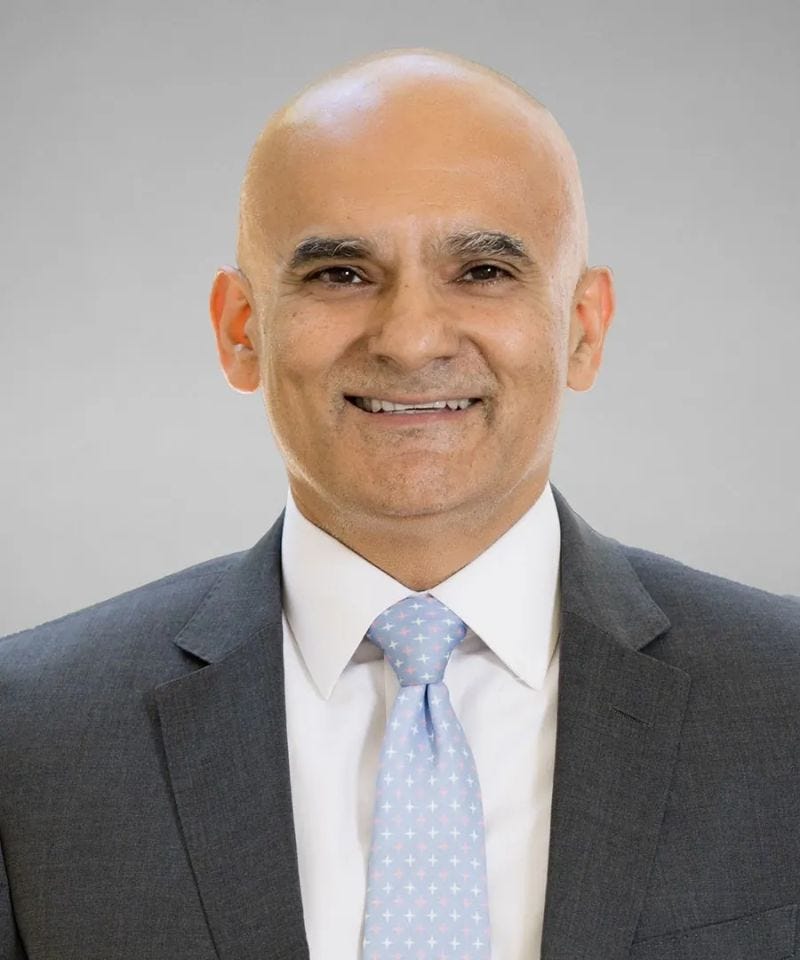
Shashi Kewalramani has built a nonlinear career across private practice, the U.S. Attorney’s Office, criminal defense, the bench, and now mediation.
This episode is about how skills compound across those chapters:
Nonlinearity
- openness to roles that do not look on-track from the outside
- why the safe path is not always the path to the best skill development
- how varied experiences can clarify what you are actually good at
Pro bono work
- trust is built through time, transparency, and action
- indigent defense can be elite training in client counseling
- the hardest thing is often getting the truth from your own client
Magistrate jurisprudence
- magistrate roles are underrated schools for writing, discovery, and case management
- repetition builds judicial pattern recognition
Compounding advantage
- skills learned in one role transfer into the next
- deep listening, credibility, and clear explanation become differentiators later
- a nonlinear career can produce a more durable kind of expertise
(3) Interview with Neel Chatterjee
Neel Chatterjee has been testing some assumptions. In Neel's return to Khurram's Quorum for episode 48, the recurring theme of this episode was testing assumptions. That includes:
- testing what jurors really think about "big tech companies"
- building consensus through a new model of a professional association of lawyers, Law Firm Partners United
- changing his belief of how to go to trial based on what he learned from fifth-graders.
We also talk about specific techniques to use to invest in your network, like looking for the "twofer", and Neel's approach to talking to jurors using the puzzle box method